
The best VPN for most African remote workers is one with an independently audited no-logs policy, servers close to you, and an honest renewal price. Proton VPN, NordVPN, and Surfshark all fit that bill in mid-2026, and Proton even has a genuinely usable free tier. A VPN helps you reach geo-blocked work tools, stay private on cafe wifi, and sometimes access platforms that block your region. It won’t magically fix every bank or card rule, and some sites actively ban VPN traffic, so this guide covers when one actually earns its place on your phone and when it doesn’t.
We rebuilt this from the ground up for freelancers and remote workers in Nigeria and across the continent. You’ll get a side-by-side comparison, honest limits, and a short checklist for picking one without falling into the renewal trap.
Do you actually need a VPN as a remote worker?
You need a VPN when a client tool, payment dashboard, or content platform is blocked in your region, or when you work from public wifi a lot. For a lot of African freelancers, that’s a regular Tuesday. A VPN routes your traffic through a server in another country and encrypts it, so the network you’re on can’t read it and the site you visit sees the server’s location instead of yours.
Here’s where it genuinely earns its keep:
- Reaching work platforms, streaming research, or beta tools that are geo-blocked from your country.
- Protecting logins and client files on shared or public wifi, where snooping is easy.
- Keeping your internet provider from profiling your browsing and selling that data.
- Testing how a client’s site or ad campaign looks to users in another country.
If none of that describes your week, you might not need one yet. Be honest about your own use before you pay for a subscription. The same honesty pays off when you pick a high-paying remote skill to learn and when you go after remote clients as a freelancer.
What won’t a VPN do for you?
A VPN is not a magic unblock-everything button, and pretending otherwise gets people burned. It changes your apparent location and hides your traffic, but it can’t override every rule a service enforces.
- It won’t bypass bank or card geo-rules on its own. Many payment systems check the card’s issuing country, your billing address, and device signals, not just your IP.
- It won’t keep you anonymous if you log into your own accounts. The moment you sign in, the service knows it’s you.
- It won’t help on platforms that ban VPN traffic. Netflix, some banks, PayPal, and a few job platforms detect and block known VPN servers, and can flag or limit your account for using one.
- It won’t make a slow connection fast. Encryption and a distant server usually cost you a little speed, not gain it.
Use a VPN for privacy and access, not as a shortcut around rules that are checked at more than the network layer. When money is involved, test small first.
Which VPNs are best for African remote workers in 2026?
The strongest picks for remote workers in mid-2026 are Proton VPN, NordVPN, and Surfshark, with ExpressVPN as a premium speed option. All four have published independent no-logs audits, which matters more than any marketing claim. The table below compares price, audit status, and who each one suits. Prices are intro rates as of mid-2026. Verify the exact figure at checkout, because the second-term renewal is usually higher.
| VPN | Intro price (verify at checkout) | No-logs independently audited? | Best for |
|---|---|---|---|
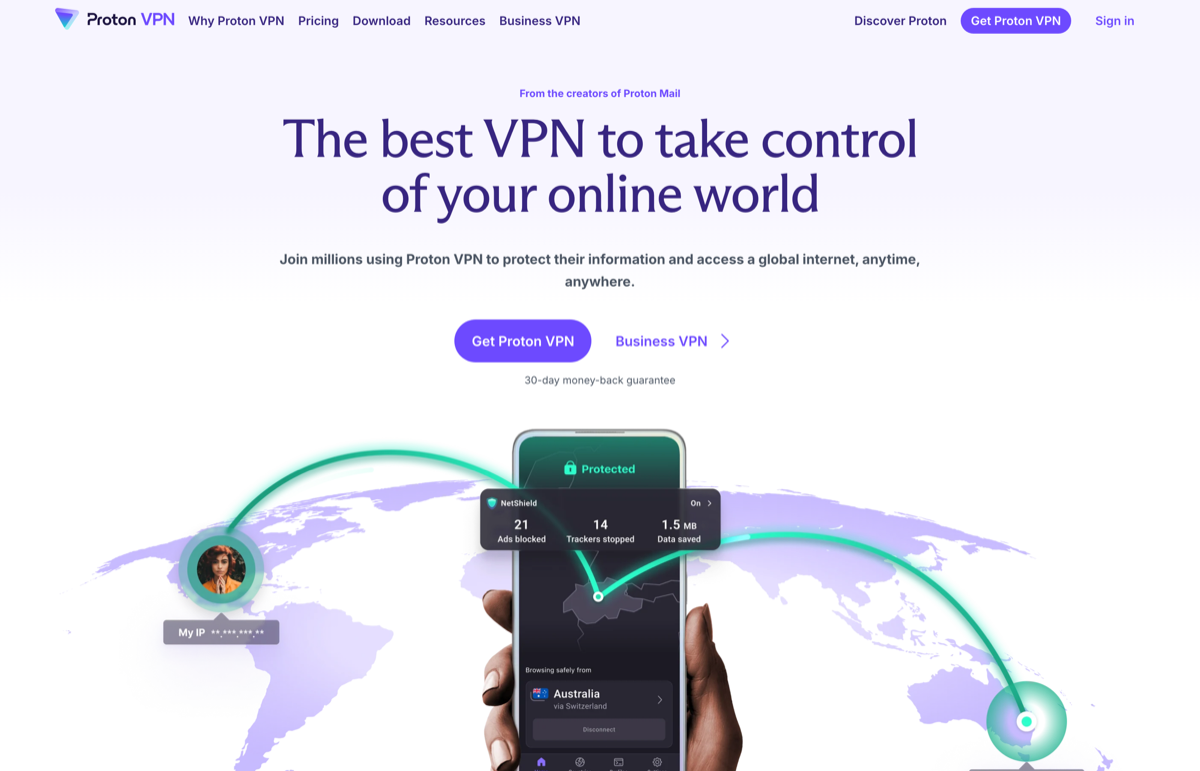
| Proton VPN | Free plan $0. Plus from $2.99/mo on a 2-year term, or $9.99/mo monthly | Yes, Securitum, August 2025 (4th annual audit) | Anyone wanting a real free tier and a privacy-first track record |
| NordVPN | About $3.09 to $3.39/mo on a 2-year term, or $12.99/mo monthly | Yes, Deloitte, late 2025 (6th audit) | Big server network and extra security features |
| Surfshark | Starter from $1.99/mo on a 24-month term, or $15.45/mo monthly | Yes, Deloitte, June 2025 (2nd report) | Unlimited devices on one account, lowest intro price |
| ExpressVPN | From $2.79/mo on the longer Basic term, plus a 3-day mobile free trial | Yes, KPMG, 2025 (3rd no-logs audit) | Speed and a wide country spread, at a premium |
One name from older lists, HMA, we’ve left off the headline picks on purpose. Its no-logs policy was independently audited by VerSprite, but that audit dates to 2020 and only a summary was published, so we can’t point to a current, full review the way we can for the four above.
What should you look for when choosing a VPN?
Pick on four things: an audited no-logs policy, a sensible jurisdiction, speed near you, and the real renewal price. Marketing pages lead with server counts, but those four decide whether the VPN protects you and whether you’ll regret the bill next year.
- Audited no-logs policy. A no-logs claim only counts if an outside firm has checked it. Proton VPN, NordVPN, and Surfshark all publish recent audits.
- Jurisdiction. The country a provider is based in affects what data it can be forced to hand over. Proton is based in Switzerland, which has strong privacy law.
- Speed near you. Look for servers in or close to your region, or in the countries whose tools you need. A distant server means slower work.
- Honest pricing. Read the renewal price, not just the intro deal. This is where most people lose money.
If you’re building a mobile-first work setup, this pairs well with our guide on making money with your smartphone.
What’s the renewal trap with VPN pricing?
The renewal trap is when a VPN advertises a low first-term price, then auto-renews at a much higher rate. The headline “$1.99/month” is almost always a 2-year intro offer, and the second term costs far more. Surfshark’s Starter plan, for example, advertises around $1.99/month on a 24-month sign-up but renews near $79 per year, roughly $6.58/month. NordVPN’s 2-year deal reverts to a standard 1-year price after the first term.
Protect yourself with three habits. Pay for the longest term only if you’re sure you’ll keep using it. Set a calendar reminder before the renewal date. And check the renewal price on the checkout page before you enter card details, because intro and renewal rates differ wildly.
Does a VPN work well on an Android phone?
Yes, every VPN here has a dedicated Android app, and mobile is where most African remote workers actually browse and work. The apps connect with one tap, run in the background, and include a kill switch that cuts your connection if the VPN drops, so your real location isn’t exposed by accident.
On mobile, watch your data and battery. A VPN adds a little overhead to both, so on a metered plan, connect when you need protection or access rather than leaving it on around the clock. Need help earning online with the device in your hand? Some sites pay you to write, and a VPN keeps those logins safer on public networks.
Frequently asked questions
Is it legal to use a VPN in Nigeria?
Using a VPN is legal in Nigeria and most African countries for everyday privacy and work. What’s illegal is whatever you’d do with it that’s already against the law. Always check your local rules and the terms of any platform you access.
Will a free VPN protect me as a remote worker?
Most free VPNs limit speed, data, or server choice, and some make money by logging and selling your activity. Proton VPN is the rare exception with an audited no-logs policy and a free tier that has no data cap, so it’s the safest free option to start with.
Can a VPN help me get paid by international clients?
Not on its own. A VPN can help you reach a platform that’s geo-blocked, but it won’t override a payment system’s checks on your card’s country or billing address. Test small amounts first, and don’t rely on a VPN to force a payout through.
Which VPN is fastest for video calls and uploads?
Speed depends most on picking a server close to you. ExpressVPN markets itself on speed at a premium, while NordVPN and Surfshark both perform well for calls and file uploads when you choose a nearby server.
How many devices can one VPN account cover?
It varies. Surfshark allows unlimited devices on one account, NordVPN covers several at once, and the others set their own limits. If you work across a phone and a laptop, check the device count before you buy.
Still mapping out your remote-work toolkit? Our branding and web services help solopreneurs look credible to the international clients you’re chasing. Pick a VPN that fits your real workflow, check the renewal price at checkout, and start with Proton’s free tier if you want to try before you pay.
Last Updated on June 5, 2026