
Technical SEO is the set of website-level optimizations (site speed, crawlability, indexing, mobile responsiveness, HTTPS, and Core Web Vitals) that help search engines find, understand, and rank your pages. You don’t need to write code to fix most of it. Free tools handle the audit and the implementation. This 13-step checklist covers what to check, why it matters, and the exact tool to use for each.
Technical SEO checklist: the 13 items at a glance
| # | Checklist item | What it does | Tool to use |
|---|---|---|---|
| 1 | Speed optimization | Reduces page load time, lowers bounce rate | PageSpeed Insights, GTmetrix |
| 2 | XML sitemap | Tells Google which pages exist and how they connect | Yoast / Rank Math / All in One SEO |
| 3 | Robots.txt | Controls which pages crawlers can access | SEO plugin or manual upload |
| 4 | Mobile responsiveness | Ensures the site works on phones, which is where most traffic now lives | Google Mobile-Friendly Test |
| 5 | Image optimization + alt text | Shrinks file sizes, gives screen readers and crawlers context | ShortPixel, TinyPNG, Imagify |
| 6 | Fix broken links | Removes 404s that hurt user trust and crawl efficiency | Ahrefs, Screaming Frog, Broken Link Checker |
| 7 | Easy navigation | Helps users and crawlers find content fast | Theme menu + breadcrumbs |
| 8 | Fix mixed-content errors | Ensures every asset loads over HTTPS | Really Simple SSL, Cloudflare |
| 9 | Use HTTPS | Required for trust signals and ranking | Let’s Encrypt, Cloudflare |
| 10 | Google Search Console | Surfaces indexing errors and search performance data | search.google.com/search-console |
| 11 | Readable permalink structure | Clear URLs that humans and Google understand | WP Settings → Permalinks |
| 12 | Install an SEO plugin | Handles schema, sitemaps, meta tags, redirects in one place | Rank Math, Yoast, AIOSEO |
| 13 | Optimize for Core Web Vitals | Hits Google’s UX speed thresholds (LCP, INP, CLS) | PageSpeed Insights, Web Vitals extension |
What is technical SEO?
Technical SEO is the practice of optimizing the back-end and structural elements of a website so search engines can crawl, index, and rank it. It covers site speed, mobile usability, indexability, structured data, secure connections, and Core Web Vitals. These are the foundations that on-page SEO and content marketing sit on top of.
If on-page SEO is what you say and content SEO is what you publish, technical SEO is whether Google can actually read any of it.
Why does technical SEO matter?
Technical SEO matters because no amount of great content ranks if search engines can’t access it. A site with crawl errors, slow load times, or HTTPS issues leaks ranking potential at every step, from indexation to user trust to Core Web Vitals scoring.
Three concrete reasons to fix the technical layer first:
- If Googlebot can’t reach a page, that page doesn’t exist in search.
- Google measures page experience (Core Web Vitals, mobile usability, HTTPS) as a ranking factor.
- A site that loads in 1.5 seconds converts roughly twice as well as one that takes 4 seconds. Speed is an SEO and a revenue problem.
What’s on a technical SEO checklist?
A technical SEO checklist is the running list of structural fixes a site owner audits and ships, in order, to make a site crawlable, fast, and ranking-ready. The 13 items below are the ones that matter on a WordPress site in 2026, though the principles apply to any platform.
1. How do I speed up my site?
Site speed is one of Google’s clearest ranking factors and the single biggest lever for bounce rate. Aim for a Largest Contentful Paint under 2.5 seconds on mobile.
Five things to try, in order of effort vs. impact:
- Compress every image before upload (target ≤ 200 KB per image for hero/banner).
- Minify CSS and JavaScript. Most caching plugins do this automatically.
- Put a CDN in front of the site. Cloudflare’s free tier is enough to start.
- Upgrade hosting if Time to First Byte (TTFB) is over 600 ms.
- Enable lazy loading for images and embeds.
Measure before and after with PageSpeed Insights. The score doesn’t matter as much as the actual LCP, INP, and CLS numbers it reports.
2. What is an XML sitemap and how do I create one?
An XML sitemap is a machine-readable file that lists every page on a site, helping search engines discover content they might otherwise miss. It lives at the root of the domain, typically at yourdomain.com/sitemap.xml or yourdomain.com/sitemap_index.xml.
On WordPress, an SEO plugin (Rank Math, Yoast, or AIOSEO) generates and updates the sitemap automatically. After publishing or updating posts, the plugin re-pings Google so new content gets indexed faster.
Once the sitemap exists, submit it to Google Search Console under Sitemaps. This step is non-negotiable. Without it, indexation of new pages can take weeks.

3. How do I set up a robots.txt file?
The robots.txt file tells search engines which paths on a site they can crawl and which to skip. It sits at yourdomain.com/robots.txt.
A minimal sensible file for a content site:
User-agent: *
Disallow: /wp-admin/
Disallow: /?s=
Sitemap: https://yourdomain.com/sitemap_index.xml
This allows all crawlers, blocks the WordPress admin area and internal search results pages, and points to the sitemap. WordPress SEO plugins generate this automatically. The file above is the default Rank Math output, lightly trimmed.
Audit the file after any plugin install. Some plugins silently change it.
4. How do I make my site mobile-friendly?
A mobile-friendly site adjusts its layout to phone and tablet screens without horizontal scroll, hidden buttons, or shrunken text. Google indexes the mobile version of every page first (mobile-first indexing), so the mobile experience is the experience as far as ranking is concerned.
Most modern WordPress themes are responsive out of the box. To verify, run the page through Google’s Mobile-Friendly Test and inspect the rendered screenshot. Anything cut off, overlapping, or unreadable needs fixing in the theme’s CSS.
For custom-built sites, use CSS media queries to handle breakpoints at 480 px, 768 px, and 1024 px at minimum.
5. How should I optimize images for SEO?
Image optimization for SEO is two jobs. Shrink the file so it loads fast, and add an alt text so screen readers and crawlers know what the image shows.
For file size:
- Resize to the display dimensions before upload. A 4000 px image displayed at 800 px wastes bandwidth.
- Compress with TinyPNG, ShortPixel, or Imagify. Aim for ≤ 200 KB per image.
- Serve in WebP or AVIF where possible. Both formats average 25–35% smaller than JPEG.
For alt text:
- Describe what the image shows, not its filename. “Screenshot of the Rank Math sitemap settings page” beats “rank-math.png”.
- Include the primary keyword naturally when it fits. Never stuff it.
- Never use the same alt text on multiple images.
6. How do I find and fix broken links?
Broken links are internal or outbound links that return a 404. They erode user trust, waste crawl budget, and signal a poorly maintained site.
To find them on WordPress, use the Broken Link Checker plugin or a one-time crawl with Screaming Frog (free up to 500 URLs). For a fuller audit including external links pointing at the site, Ahrefs Webmaster Tools is free.

For each broken link, do one of three things:
- Update the link to a working URL.
- Set a 301 redirect from the dead URL to the closest live page.
- Remove the link entirely if no replacement makes sense.
7. How do I improve site navigation for SEO?
Site navigation matters for SEO because it shapes how easily users and crawlers move between pages. A clear navigation structure increases time on site, reduces bounce, and helps search engines understand which pages are most important.
Three structural fixes that compound:
- Keep the main menu to 5–7 top-level items. More than that and users miss what’s important.
- Add breadcrumbs to every blog post and category archive. They show parent categories and give crawlers a clear hierarchy signal.
- Link generously between related posts within content. Use descriptive anchor text, never “click here.”
8. How do I fix mixed-content errors?
A mixed-content error happens when a page loaded over HTTPS pulls in resources (images, scripts, stylesheets) over plain HTTP. Browsers flag this with a “Not Secure” warning, and crawlers treat it as a trust signal failure.
The fastest fix on WordPress is the free Really Simple SSL plugin, which rewrites HTTP asset URLs to HTTPS at runtime. For a permanent fix, run a search-and-replace in the database (the Better Search Replace plugin handles this safely) to update every old HTTP reference.
If a Cloudflare proxy sits in front of the site, enable Automatic HTTPS Rewrites under the SSL/TLS settings. It catches most issues on the fly.
9. Do I need HTTPS for SEO?
Yes. HTTPS is a lightweight ranking signal and a hard requirement for user trust, Core Web Vitals scoring, and any browser-based feature that handles forms or payments. Modern browsers display “Not Secure” warnings on every HTTP page, which destroys conversion.
Most hosts (Bluehost, SiteGround, Hostinger, Cloudways, Kinsta) include a free Let’s Encrypt SSL certificate at signup. If yours doesn’t, install Let’s Encrypt manually or route the site through Cloudflare’s free SSL.
After enabling HTTPS, run through the mixed-content check (step 8) and update the site URL in WordPress Settings to use https://.
10. How do I set up Google Search Console?
Google Search Console (GSC) is the free Google tool that shows which pages are indexed, which keywords drive traffic, and what indexing errors exist. Every site needs it. Without it, every other SEO decision is guesswork.
To set up:
- Go to search.google.com/search-console and sign in with the Google account that owns the site.
- Click Add property and enter the domain (without
https://for the domain-level property, or with for URL-prefix). - Verify ownership via the HTML tag, DNS record, or Google Analytics method.
- For WordPress, the easiest verification is via an SEO plugin. Rank Math and Yoast both have a one-click connection to GSC.
- Once verified, submit the sitemap (from step 2) under Sitemaps.
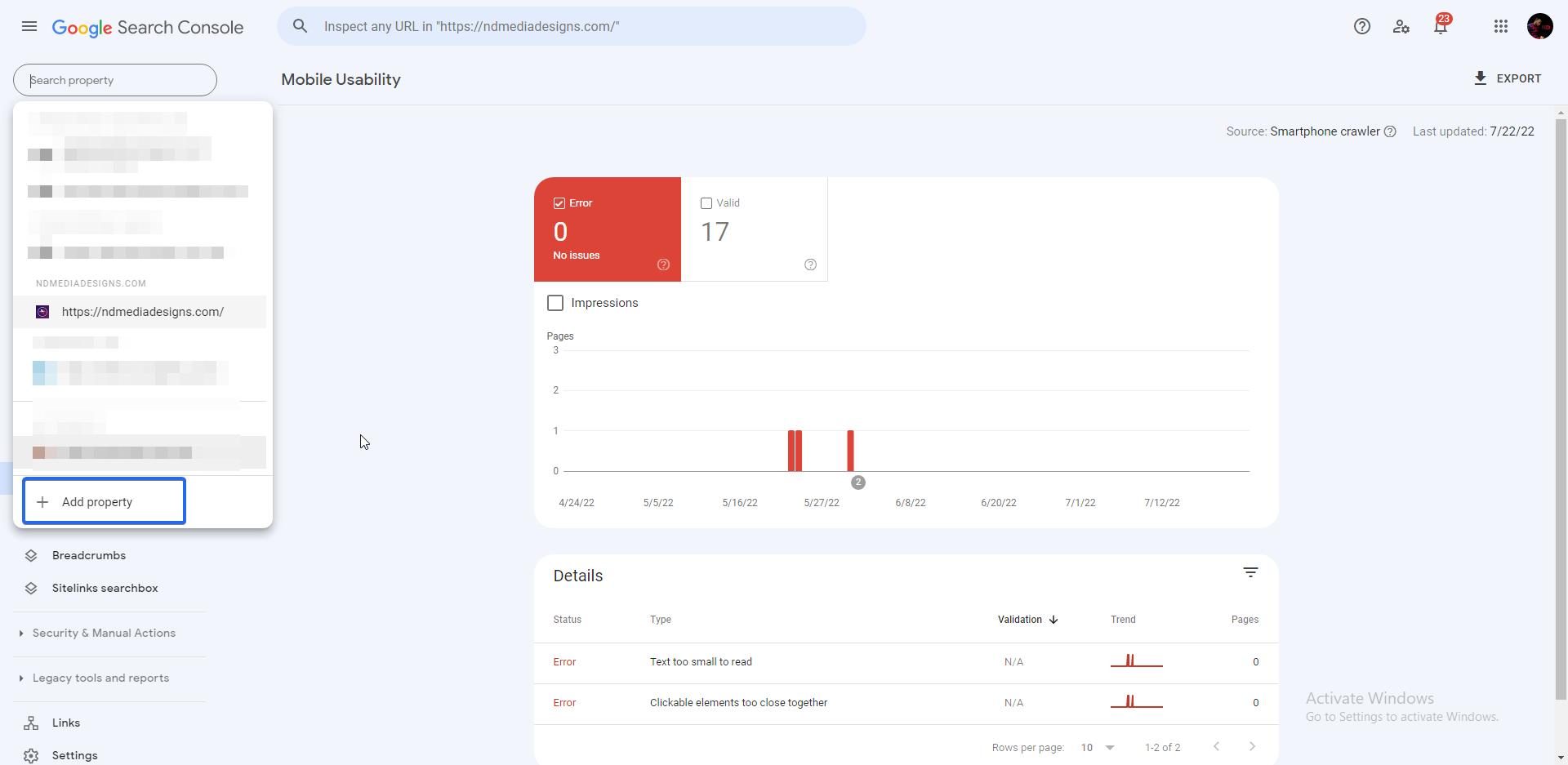
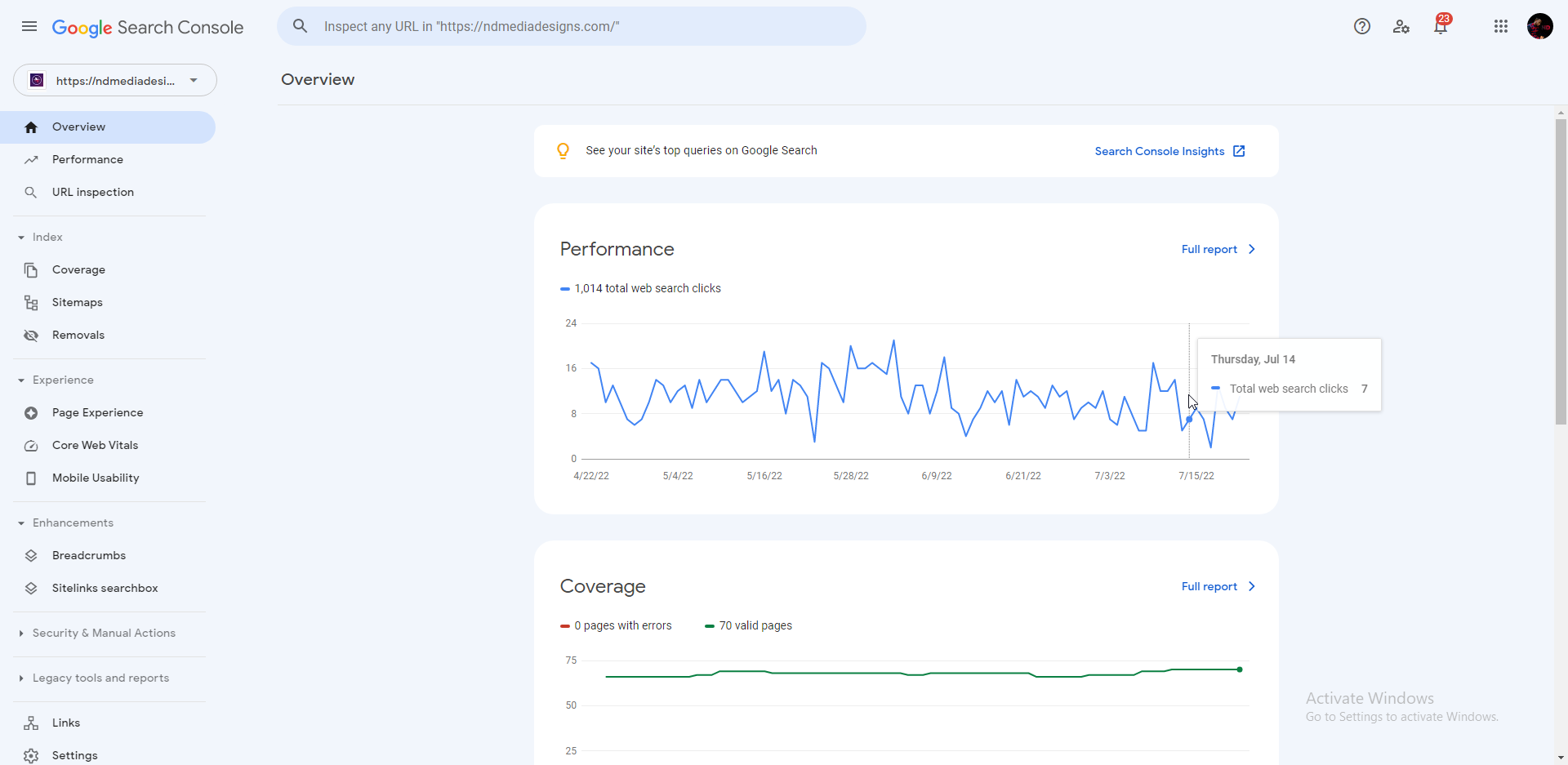
Adding a site to GSC doesn’t boost ranking on its own. It surfaces the data needed to know what to fix next.
11. What is a readable permalink structure?
A readable permalink is a URL that uses meaningful words instead of dates, numbers, or random parameters. Compare:
- Not readable:
example.com/?p=137 - Readable:
example.com/technical-seo-checklist/
Readable permalinks help users predict where a link goes and let crawlers infer page topic from the URL. They’re also easier to share and remember.
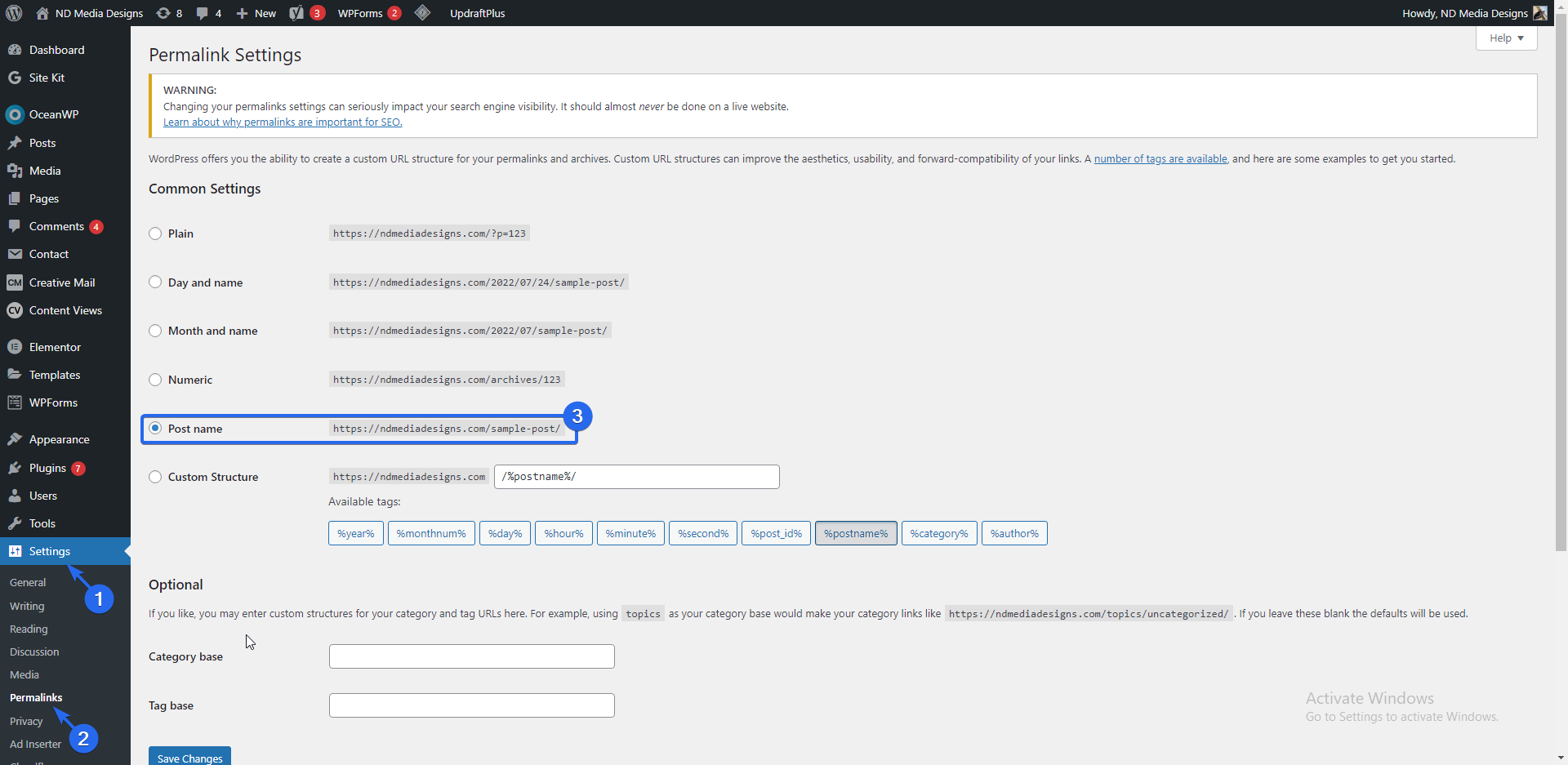
On WordPress: Settings → Permalinks → Post name. Set this on day one and don’t change it again. Every permalink change requires a 301 redirect from the old URL to preserve link equity.
12. Which WordPress SEO plugin should I use?
The right WordPress SEO plugin handles sitemap generation, meta tags, schema markup, and redirects in one place. The four production-grade options:
- Rank Math. Feature-rich free tier, modern UI, strong schema support. Recommended default.
- Yoast SEO. The longest-running option, conservative defaults, good for non-technical writers.
- All in One SEO (AIOSEO). Strong on schema and link assistant features.
- SEOPress. Pro version is cheaper than the others, no upsell churn in the dashboard.
All four cover the same fundamentals. Pick one, configure it once, and don’t switch. Migrating between SEO plugins is painful because each stores its data differently.

13. How do I optimize for Core Web Vitals?
Core Web Vitals are Google’s three page-experience metrics: how fast the main content loads, how responsive the page feels to interaction, and how stable the layout is. They’re a confirmed ranking signal and a direct measure of user experience.
The three metrics, current as of 2026:
- LCP (Largest Contentful Paint). How fast the largest visible element loads. Target: under 2.5 seconds.
- INP (Interaction to Next Paint). How fast the page responds to a user’s interaction. Target: under 200 ms. INP replaced First Input Delay as a Core Web Vital in March 2024.
- CLS (Cumulative Layout Shift). How much the layout jumps as the page loads. Target: under 0.1.
To improve all three:
- Audit third-party scripts (analytics, chat widgets, ad tags). Every one slows INP.
- Set explicit width and height on every image, video, and embed to prevent layout shift.
- Inline critical CSS for the above-the-fold content, defer everything else.
- Upgrade hosting if Time to First Byte exceeds 600 ms on the server-side test.
Measure with PageSpeed Insights (lab data) and the Core Web Vitals report inside Google Search Console (real-user data, which is the one Google actually uses for ranking).
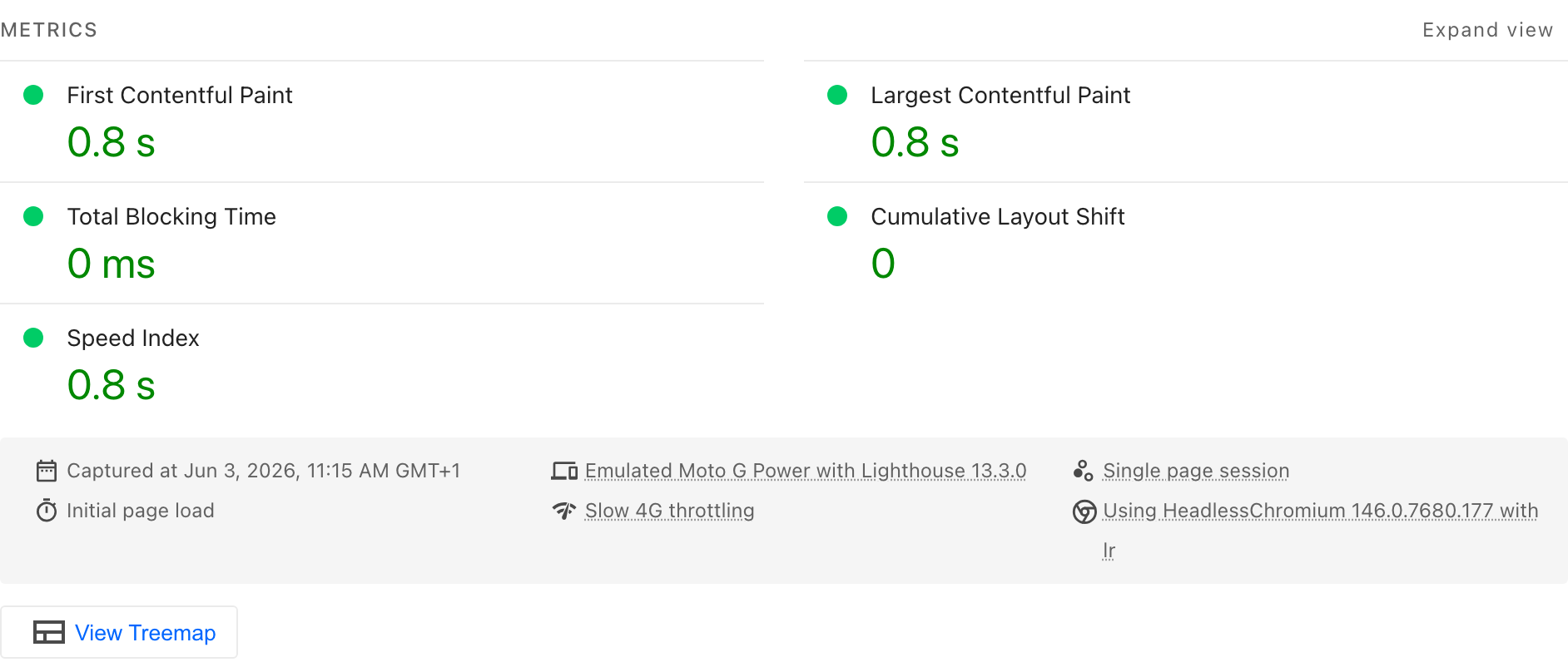
Example of a passing PageSpeed Insights mobile result. Aim for green across every metric.
Is technical SEO worth the effort?
Yes, and the order matters. Technical SEO is the foundation that on-page and content SEO sit on. A fast, crawlable, indexable, mobile-friendly site amplifies every piece of content published on it. A slow, broken, half-indexed site wastes every word of content effort.
For most small-business and creator sites, the 13 items above are a one-day audit and a two-to-three-day implementation. The compounding return is permanent. Every post published from then on launches on a stronger foundation.
If working through this checklist on your own feels overwhelming, that’s exactly the kind of project we take on at ND Media Designs. Get in touch and we’ll audit the site, ship the fixes, and hand back a measurable before-and-after.
Frequently asked questions about technical SEO
How long does it take to see results from technical SEO?
Most technical SEO fixes show measurable impact within 2–8 weeks. Speed improvements affect bounce rate the same day. Crawlability fixes (sitemap, robots.txt, broken links) take 1–4 weeks for Google to re-crawl and reindex. Core Web Vitals improvements show up in Search Console’s real-user data after 28 days, since the report uses a rolling 28-day window.
Can I do technical SEO myself or do I need a developer?
Most technical SEO is doable without coding. Installing an SEO plugin, compressing images, fixing broken links, setting up Search Console, and configuring redirects are all point-and-click on WordPress. A developer becomes worth hiring when issues involve custom themes, server configuration, schema markup beyond what plugins generate, or JavaScript-heavy frameworks like React or Next.js.
How often should I do a technical SEO audit?
Run a full audit twice a year, and a lightweight check after any major site change (new theme, new plugin, redesign, migration). Search Console flags new errors as they appear. Set up email alerts so you don’t miss them.
Is technical SEO more important than content?
Neither replaces the other. Technical SEO is necessary but not sufficient. A perfectly tuned site with weak content won’t rank. Strong content on a broken site won’t rank either. Fix the technical foundation first, then invest in content.
What’s the difference between technical SEO and on-page SEO?
Technical SEO covers site-wide structural elements (speed, crawlability, mobile, HTTPS, schema). On-page SEO covers per-page content elements (title tags, meta descriptions, headings, keyword placement, internal links). Both are needed. Technical SEO is the foundation, and on-page SEO is what you build on it.
How much does technical SEO cost in 2026?
DIY using free tools (PageSpeed Insights, Search Console, Rank Math) costs nothing but time, typically 10–20 hours for an initial cleanup of a small site. Hiring a freelancer for a one-time technical audit and implementation ranges from $300 to $2,000 depending on site size. Ongoing technical SEO retainers run $500–$2,500 per month for an agency or specialist.
Last Updated on June 3, 2026